A solar inverter is the second most important component of a solar system; one that converts DC power into usable AC power.
Now we come to the most common question:
- What kind of inverter is best for home solar?
- String inverter vs. micro inverter vs. hybrid inverter: which is best for your solar system?
The choice will be based on a number of factors, such as the solar output you want, the design of your solar system, and your budget. In this blog, let’s talk all about these three solar inverters and compare them to help you decide which is the best for you. If you need guidance in selecting a solar inverter, Sunora Solar is here to help you. If you have any enquiries related to inverters, do contact us.
What Does A Solar Inverter Do?
Before jumping into understanding the different types of solar inverters, let’s understand their basic functions.
Your appliances and devices run on AC power, but solar systems produce DC power. This is where solar inverters play the most important role by converting DC into AC power.
But that’s not all. A solar inverter is the brain of the solar system, handling other important tasks like:
- Watch the system performance for any loss of output and point out any faults in the system.
- Maximum Power Point Tracking (MPPT) for maximum energy extraction.
- Control of the energy flow from solar panels to your home or office, the utility grid, and a solar battery (hybrid systems).
- For net metering to balance energy supply/demand between the grid and the solar system.
Thus, choosing the right solar system is essential to get the desired performance and manage your solar system more efficiently.
Let’s look at the three most common types of solar inverters to determine which one of them is best for your needs.
What Is A String Inverter?
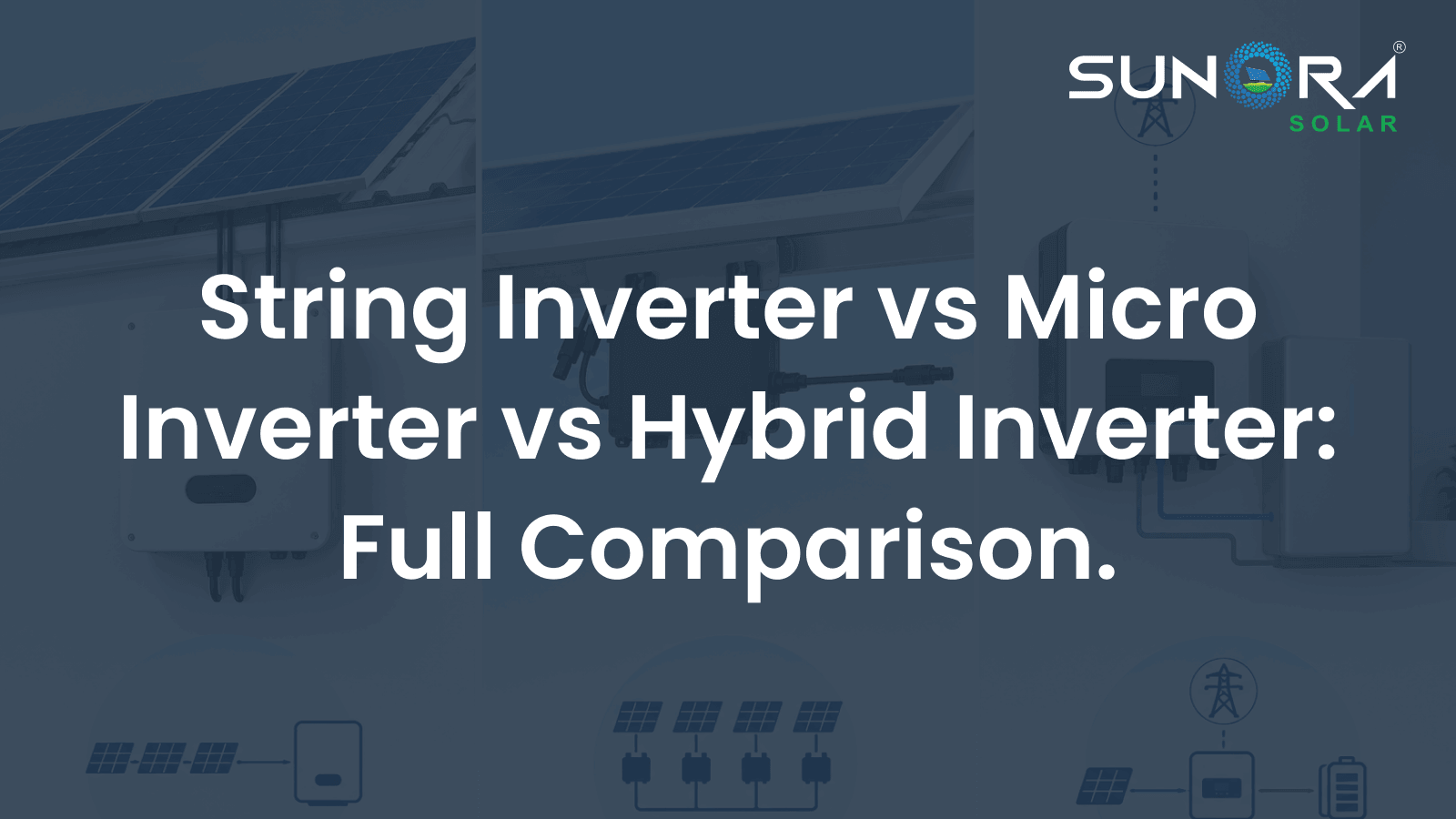
The string inverter for solar panels is one of the most used types, especially for residential projects. Here, all the solar panels are connected to the inverter through a “string”. All the devices send their DC power to the inverter together through the string connection.
The string inverter efficiency depends on all the solar panels. If one panel’s performance drops, the entire system’s output lowers. In ideal situations, where the solar panels have maximum sunlight exposure without any shading, the string inverter works the best.
Advantages of string inverter:
- Inverter type with the lowest cost
- Simple installation process
- Easier to maintain
- One of the most used and traditional techniques
Disadvantages of string inverter:
- Partial shading or damage in one solar panel affects the output of all the panels connected to the string
- You can’t track the performance of each panel
- Not ideal for complex solar panel mounting layouts
String inverter is best for:
Simple rooftop solar systems that have minimal to no shading and have a simple installation layout.
What Is A Micro Inverter For Solar?
In the Micro Inverter system, each solar panel has an individual inverter that converts its DC output into AC and transfers it for further use. It treats each solar panel as an individual system to generate and manage electricity flow. The micro inverter advantages and disadvantages make them one of the smartest choices in the modern day.
Advantages of micro inverters:
- All solar panels work independently, reducing system failures
- Maximum shade tolerance for each solar panel
- Easy to monitor the performance of solar panels
- One can easily add new solar panels to the system
- Better warranties on solar inverters
Disadvantages of micro inverters:
- Higher upfront cost of installation
- Installation process is a little complex
- Might need professional help for maintenance and servicing
Micro inverters are best for:
Complex solar system layouts or if the panels get overshadowed throughout the day. It is also ideal for those who want to track the performance of solar panels accurately.
What Is A Hybrid Inverter For Solar?
Hybrid inverters are designed for hybrid solar panel systems, where the power output must be managed between the panels, grid connection, and battery. The solar hybrid inverter with battery backup stores the power in the batteries to use it at night or during a power cut. The solar panels are usually connected through the string inverter system for a centralized system.
Advantages of hybrid inverter:
- Built-in battery integration support for power backup
- Smart energy management system to balance power flow between panels, batteries, and grid
- Reduces the requirement of a separate inverter for a solar battery
- Can be used to expand the solar battery system
Disadvantages of hybrid inverter:
- Higher upfront cost of installation
- Complex installation process
- Works better only when paired with solar batteries; thus, not ideal for on-grid connection
Hybrid solar inverters are best for:
Independent solar systems that have power backup through solar batteries.
String Inverter Vs Micro Inverter Vs Hybrid Inverter Comparison
| String Inverter | Micro Inverter | Hybrid Inverter | |
| Installation cost | Low | Highest | Moderate to high |
| Shade tolerance | Low | High | Moderate |
| Monitoring system | System level | Panel level | System level and battery monitoring |
| Maintenance | Simple | Complex and needs professional support | Moderate and might need regular service from professional |
| ROI | Good | Higher | Very high due to battery connection |
| Battery backup | No built-in support | No built-in support | Built-in support |
| Installation complexity | Low | Moderate | Moderate to high |
| System scalability | Limited | Excellent | Excellent |
Which Solar Inverter Is Best For Rooftop Solar Projects?
The choice of ‘best’ solar inverter for rooftop or ground-mounted systems depends on various factors. Some of those factors are:
- Rooftop layout: The space to design the layout of the solar panels
- Shading: The shadow cast on the solar panels by surrounding buildings or trees
- Budget: Consider the cost of ownership (upfront cost, maintenance, and other post-installation expenses)
- Long-term goals: Define if you plan on expanding the solar system in the future
Choose a string inverter if:
- Your rooftop is free of shade for the majority of the day
- You can create a simple solar panel layout
- You don’t need a solar battery
- You don’t want to track the performance of each panel
Choose micro inverters if:
- Your rooftop gets shaded
- Your solar panel layout is complex or multidirectional
- You want to monitor performance of each solar panel
- You need a long-term warranty on the solar inverter
Choose a hybrid inverter if:
- You want to build an independent solar system with solar batteries
- You need a smart system to manage energy flow between panels, grid, and batteries
Sunora Solar is one of the best solar panel manufacturers in India. We have a trusted in-house solar inverter designed for modern solar systems. We offer classic on-grid solar inverters and hybrid solar inverters to ensure your solar system operates at its best. Browse our solar products or call us with any questions.
Conclusion
The choice between string inverter vs micro inverter vs hybrid inverter can determine the ROI of your solar system. A string inverter is a centralized system, and thus the performance of one panel affects the output of the whole system. Micro inverters help you track the performance of each panel. A hybrid inverter helps you manage power flow between panels, the grid, and batteries. The final decision comes down to your solar panel set up, shading, total cost, and whether you want to add a solar battery to your system. Sunora Solar is ready to help you choose the right one for you based on your needs. Contact Us for more details.
FAQs
What are the three types of solar inverters?
The following are the three types of solar inverters in India:
- String Inverter to create a centralized system
- Micro Inverters for individual solar panels
- Hybrid inverter for a solar system with batteries
Which is the best inverter type for home solar?
The ‘best’ choice of inverter depends on your usage requirements, system layout, shading on the rooftop, budget, and long-term solar system expansion plans. If you want to build a hybrid or off-grid solar system, a hybrid solar inverter is the best choice. Buy the best hybrid inverter for solar panels from Sunora Solar.
How to choose the right solar inverter for your solar system?
When choosing a solar inverter, focus on a few factors like:
- The shading on the area of solar mounting
- The orientation and layout of solar panels
- Your total budget and the cost of ownership
- Reputation of the solar inverter supplier
- Performance efficiency and performance tracking system
What is the difference between a normal inverter and a solar inverter?
A normal inverter converts the energy drawn from the battery into AC power. However, a solar inverter is designed to convert the power generated by the solar panels directly.